My first year gardening, I planted tomatoes in early April because the weather felt warm enough and I was impatient.
A cold snap hit two weeks later and wiped out half of them. I didn’t understand frost dates yet, I just knew the air felt nice.
This guide covers when to plant your garden and how a planting calendar actually works, so you’re not guessing based on how the weather feels on a given afternoon.
Rather than just handing you a generic date, it walks through the method behind the timing, so you can apply it to your own yard no matter where you live.
If you don’t know your frost dates or hardiness zone yet, don’t worry, the sections below walk through exactly how to find both before you need to use them.
Quick Answer: How to Know When to Plant Your Garden
- Find your average last spring frost date and first fall frost date
- Sort your vegetables into cool-season and warm-season groups
- Count backward or forward from your frost dates based on each crop’s timing
- Decide whether each vegetable gets started indoors, direct sown outside, or either
- Harden off any indoor-started seedlings before transplanting
That’s the whole method in a nutshell. Let’s walk through each piece.
What Is a Planting Calendar
A planting calendar is really just a schedule built around your local frost dates, telling you when it’s safe to start seeds indoors, move seedlings outside, or sow directly into the garden for each vegetable you’re growing.
It’s not a fixed date on the same day every year, it shifts a little based on your specific location and that year’s weather.
Bottom Line: A planting calendar is your local frost dates translated into a practical, vegetable-by-vegetable schedule.
Why Frost Dates Are the Foundation of Any Planting Calendar
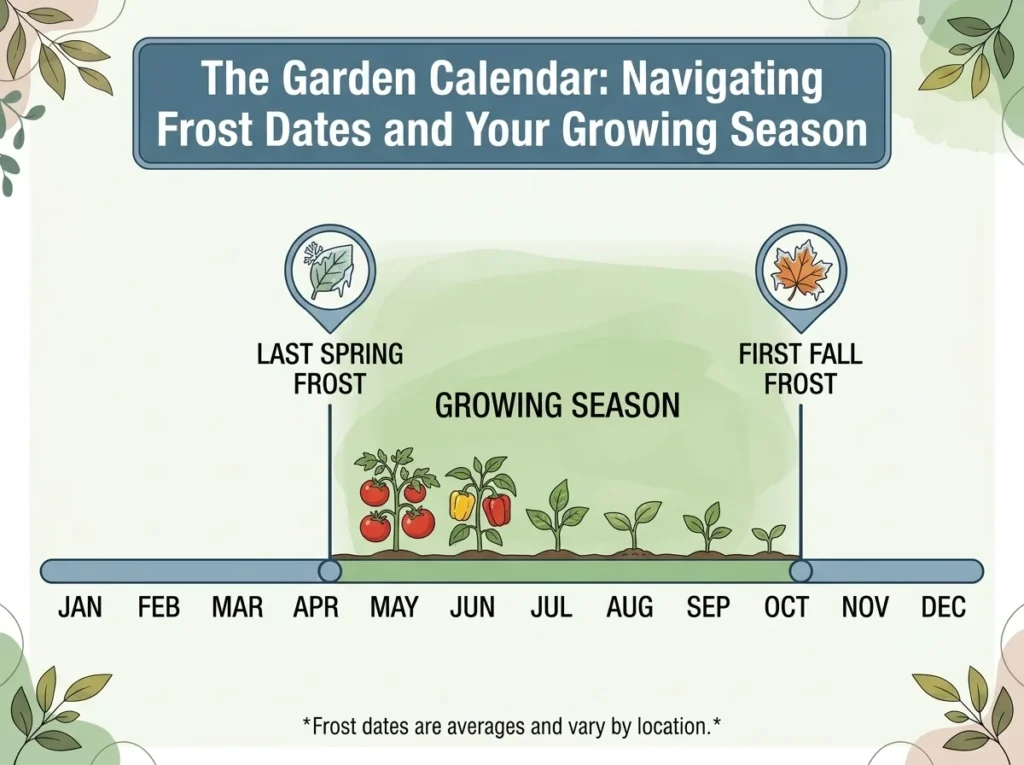
Nearly everything in a planting calendar traces back to two dates, when your last spring frost typically happens and when your first fall frost typically arrives.
Everything else in this guide builds on those two numbers.
Finding Your Last Spring Frost Date
Your last spring frost date is the average date after which frost becomes unlikely in your area.
It’s not a guarantee, some years run early, some run late, but it’s the number most planting guidance is built around.
Think of it as a planning anchor rather than a hard promise from the weather.
Finding Your First Fall Frost Date
Your first fall frost date works the same way in reverse, the average date when the first frost typically shows up in autumn.
This one matters just as much, since it marks the end of your growing season for anything that can’t handle cold, and it’s the number you’ll use later for fall planting specifically.
Where to Look Up Your Exact Frost Dates
Your local cooperative extension office publishes frost date averages specific to your county, and NOAA’s climate data tools let you search by zip code for the same information.
I’d recommend checking both, since local extension offices sometimes have more nuanced regional data than a broad zip code lookup does, especially if you live somewhere with a lot of elevation change or a microclimate nearby, like a valley or a spot close to a large body of water.
Here’s how the main sources compare:
Frost Date Sources Compared
| Source | What It Tells You | Best For |
|---|---|---|
| Local cooperative extension office | County-level frost averages | Most accurate for your specific region |
| NOAA climate data | Zip code based frost averages | Quick, broad estimate |
| USDA hardiness zone map | Winter cold severity, not frost dates directly | General climate context |
Quick Tip: Don’t forget your own yard has microclimates too, not just your region. A spot against a south-facing wall warms up earlier than the middle of an open yard, while a low corner where cold air settles can stay frosty longer than everywhere else on the same property. If part of your garden consistently lags behind the rest in spring, that’s usually why.
Key Takeaway: Your last spring frost date and first fall frost date are the two numbers everything else in this guide depends on, and both are easy to look up for free.
Cool-Season vs. Warm-Season Planting Timing
This is the single most useful distinction in the whole planting calendar concept, and once it clicks, the rest of the timing questions get a lot easier to answer on your own.
Cool-Season Crops, How Many Weeks Before Your Last Frost
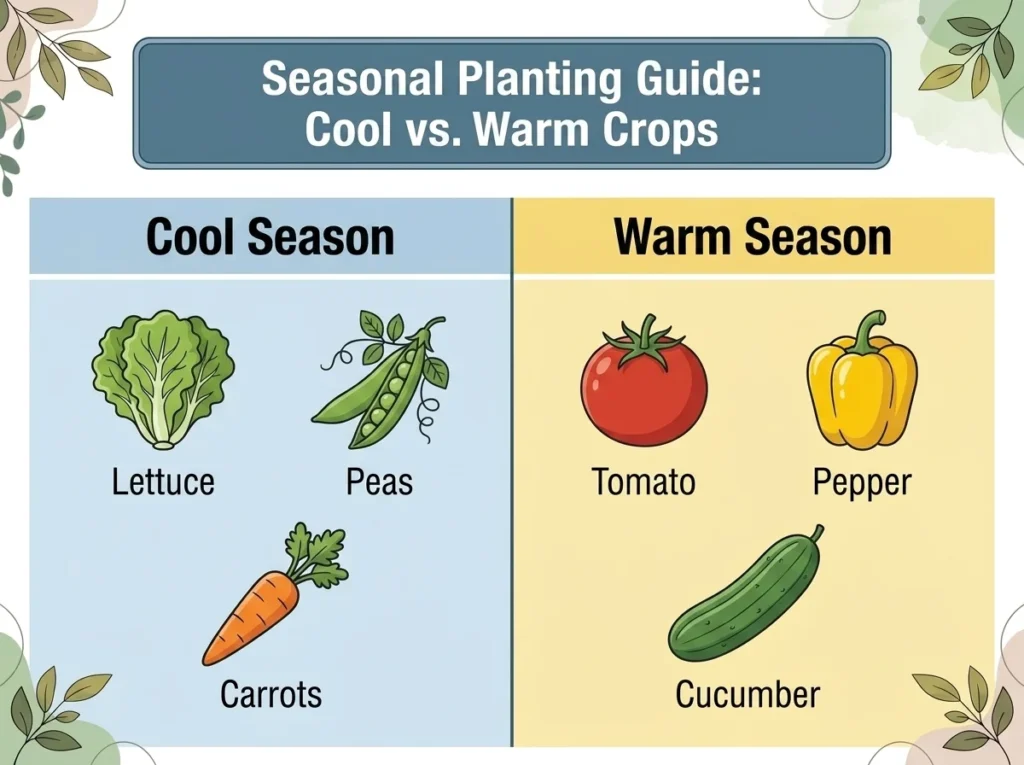
Cool-season crops tolerate light frost and cooler soil, so they can go in the ground before your last frost date, sometimes weeks before.
Lettuce, spinach, peas, and carrots are classic examples, they actually prefer to get growing while it’s still a bit chilly out, and waiting until it’s warm often makes them bolt or struggle later in the season.
Seed catalogs sometimes call these crops frost hardy, worth knowing if you see that phrase on a seed packet.
Warm-Season Crops, How Many Weeks After Your Last Frost
Warm-season crops are a different story entirely, they need warm soil and no risk of frost to survive, let alone thrive.
Tomatoes, peppers, cucumbers, and squash all fall into this group, and planting them too early, like I did with those tomatoes, is one of the most common beginner mistakes in gardening.
Common Mistake: Soil temperature matters here as much as air temperature. Warm-season crops can sulk in cold soil even on a mild day if the ground hasn’t caught up yet.
A cheap soil thermometer pushed a couple inches into the bed takes the guesswork out of this, most warm-season crops want soil at least in the 60s Fahrenheit before they go in. Seed catalogs often label these crops frost tender for the same reason.
Here’s how common vegetables line up against your last frost date:
Timing Table: Common Vegetables by Weeks Relative to Last Frost
| Vegetable | Timing Relative to Last Frost |
|---|---|
| Peas | 4-6 weeks before |
| Lettuce | 2-4 weeks before |
| Spinach | 4-6 weeks before |
| Carrots | 2-3 weeks before |
| Tomatoes (transplant) | 1-2 weeks after |
| Peppers (transplant) | 2-3 weeks after |
| Cucumbers | 1-2 weeks after |
| Squash | 1-2 weeks after |
Key Takeaway: Cool-season crops go in before your last frost. Warm-season crops wait until after it, once the soil itself has warmed up too.
Should You Start Seeds Indoors or Direct Sow Outdoors
Not every vegetable wants the same treatment here, and getting this wrong can waste weeks of your growing season.
Vegetables Typically Started Indoors
- Broccoli
- Brussels sprouts
- Cabbage
- Cauliflower
- Eggplant
- Lettuce
- Okra
- Onions
- Swiss chard
These are all commonly started indoors first, then transplanted out once conditions allow.
Vegetables Typically Direct Sown Outdoors
- Beets
- Carrots
- Garlic
- Parsnips
- Potatoes
- Radishes
- Squash
These generally do better sown directly into the garden, since their roots don’t love being disturbed by a transplant.
Vegetables That Can Go Either Way
- Beans
- Celery
- Corn
- Kale
- Spinach
These are flexible, they’ll do fine started indoors or sown directly, so this one really comes down to your own preference and how much of a head start you want.
For a quick side-by-side view, here’s the same information as a table:
Quick Reference: Indoor Start vs. Direct Sow vs. Either
| Start Indoors | Direct Sow Outdoors | Either Works |
|---|---|---|
| Broccoli | Beets | Beans |
| Brussels sprouts | Carrots | Celery |
| Cabbage | Garlic | Corn |
| Cauliflower | Parsnips | Kale |
| Eggplant | Potatoes | Spinach |
| Lettuce | Radishes | |
| Okra | Squash | |
| Onions | ||
| Swiss chard |
When to Start Seeds Indoors
For most crops that need an indoor start, plan on beginning seeds about 6 to 8 weeks before your last spring frost date.
That gives them enough time to grow sturdy enough to handle the move outside once it’s warm enough.
Quick Tip: Mark this date on an actual calendar, not just your phone reminders. I’ve missed my own start window more than once because a notification got buried under a dozen other things.
When to Transplant Seedlings Outside
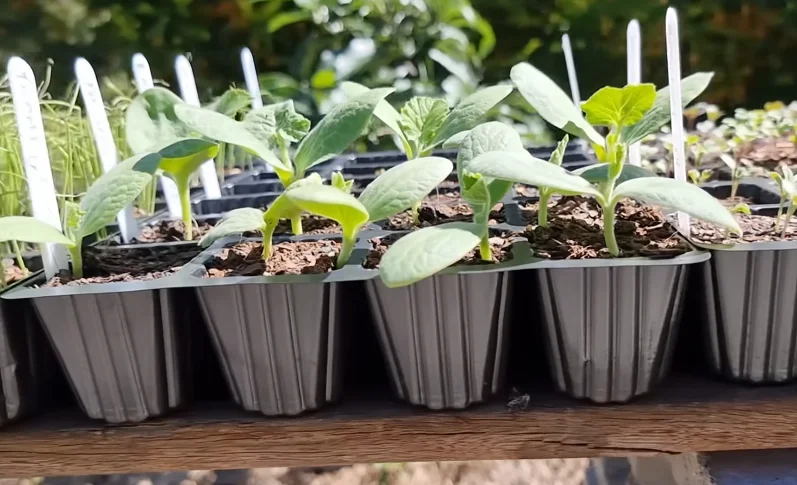
Once your seedlings have outgrown their starter pots, or the calendar says it’s close to time, start hardening them off about a week before your last frost date.
That means setting them outside for short stretches, gradually increasing the time, so they adjust to real sun and wind before you plant them for good.
Common Mistake: Skipping this step is a fast way to shock a seedling that looked perfectly healthy the day before.
Understanding Your USDA Hardiness Zone
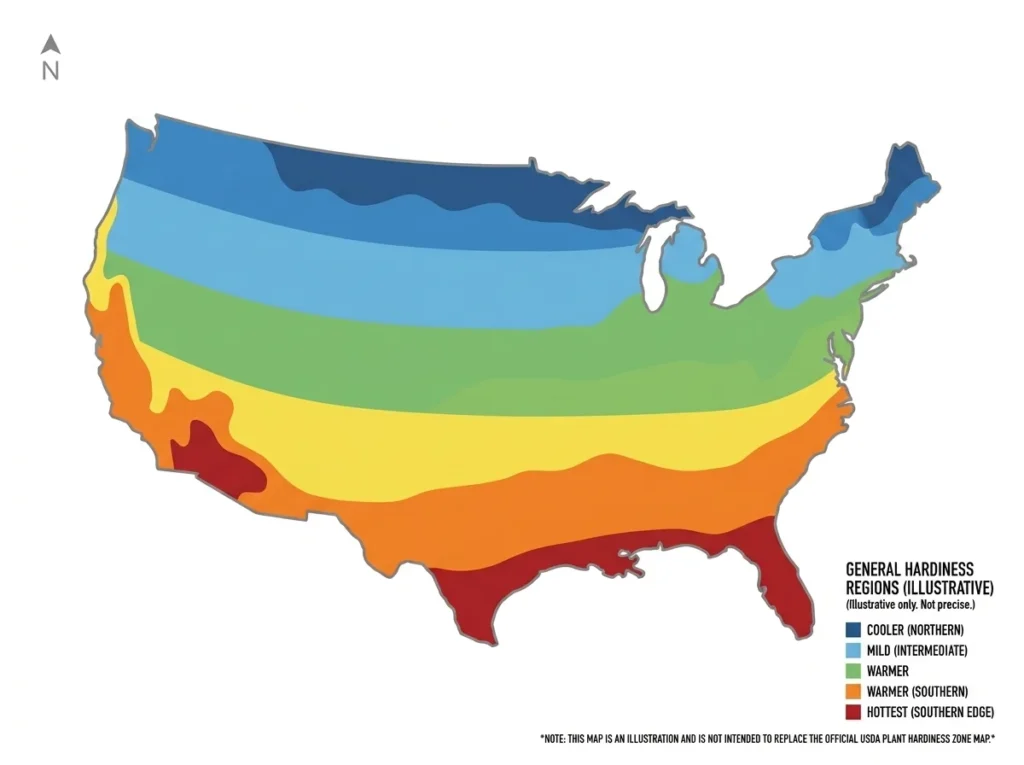
Your hardiness zone is a broader climate classification, based on the average lowest winter temperature in your area, and it’s a useful reference alongside your specific frost dates.
Most of the continental United States falls somewhere between zone 3 and zone 9, with lower numbers meaning colder winters and higher numbers meaning milder ones.
Hardiness Zone Quick Reference Table
| Zone | General Climate | Typical Frost-Free Growing Season |
|---|---|---|
| Zone 3-4 | Cold winters, short season | Roughly 90-120 days |
| Zone 5-6 | Moderate winters | Roughly 140-180 days |
| Zone 7-8 | Mild winters | Roughly 180-240 days |
| Zone 9 | Very mild winters | Roughly 240-300 days |
Your zone and your frost dates aren’t the same thing, and it’s worth knowing which one to lean on for which decision.
Hardiness Zone vs. Frost Date, When to Use Which
| What It Tells You | When It Matters Most | |
|---|---|---|
| Hardiness zone | General winter cold severity, useful for perennials and fruit trees | Deciding what can survive winter in your area long term |
| Frost date | The specific window for planting and harvesting annual vegetables | Deciding exactly when to plant or transplant each season |
Remember: If the two ever seem to disagree, trust your actual frost dates for anything you’re planting this season, your zone is more useful for bigger, longer-term decisions like whether a perennial herb or fruit tree will survive your winters at all.
Fall Planting Calendars Work Differently
Most planting advice focuses on spring, but fall planting deserves its own logic, not just a mirror image of spring timing.
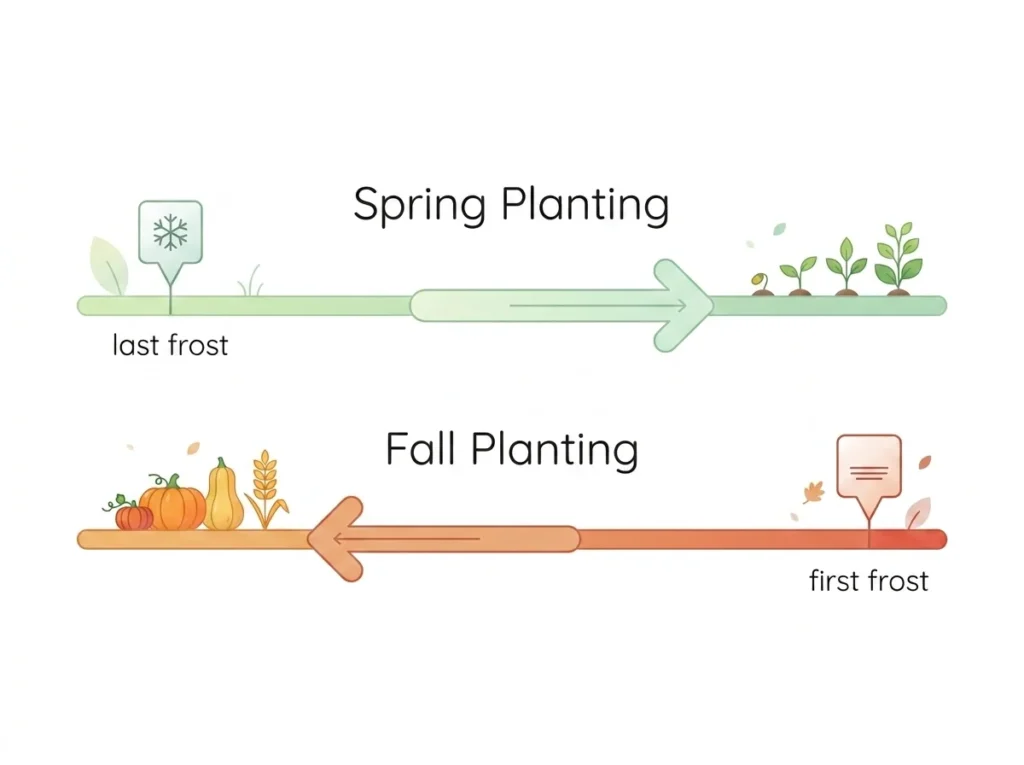
Instead of counting forward from your last frost, you count backward from your first fall frost, working out how many days a crop needs to mature before cold weather shuts things down.
A vegetable that takes 60 days to mature needs to go in the ground at least 60 days before your first fall frost, plus a little buffer, since fall days shorten and cool, which slows growth compared to the same crop planted in spring.
Spring Timing vs. Fall Timing at a Glance
| Counts From | Direction | Key Risk | |
|---|---|---|---|
| Spring planting | Last frost date | Forward | Planting too early into cold soil |
| Fall planting | First frost date | Backward | Not leaving enough buffer time before cold shuts growth down |
I skipped fall planting entirely for my first few years, it just never occurred to me that the season wasn’t over once summer crops finished.
The first time I actually sowed a fall crop of spinach on purpose, I was surprised how well it did with almost no pest pressure compared to the same crop in spring.
Key Takeaway: Spring planting counts forward from your last frost. Fall planting counts backward from your first frost, with extra buffer built in.
Common Timing Mistakes
Planting warm-season crops too early is probably the most common mistake, and it’s an easy one to make once the weather starts feeling nice, even though the calendar says otherwise.
Ignoring the difference between average frost dates and guaranteed frost dates trips people up too, an average date means roughly half the time frost happens later than that, not that you’re automatically safe once the date passes.
Forgetting fall planting entirely is another one, a lot of gardeners plant once in spring and call it done, missing a genuinely productive second window for cool-season crops later in the year.
Common Mistake: Trusting the calendar date over the actual forecast is a subtler mistake. Your calculated date is based on averages, so as it approaches, check the real forecast for your area, if a late cold snap is predicted, it’s worth waiting a few extra days regardless of what the calendar says.
Frequently Asked Questions
What is a planting calendar?
A planting calendar is a schedule built around your local frost dates that tells you when to start seeds indoors, transplant outside, or direct sow each vegetable.
How do I find my planting zone?
You can look up your USDA hardiness zone using your zip code through the USDA’s official hardiness zone map, available online
How many weeks before the last frost should I start seeds indoors?
Most crops that need an indoor start should begin about 6 to 8 weeks before your last spring frost date
Can I plant vegetables after the last frost date has passed?
Yes, in fact most warm-season crops should go in after that date, not before, since the date marks when frost becomes unlikely, not a deadline.
Do I need a different calendar for fall planting?
Yes, fall planting works backward from your first fall frost date rather than forward from your last spring frost date, and timing needs a bit of extra buffer since growth slows as days shorten.
What happens if I plant too early?
Cold soil and a late frost can kill or badly stunt warm-season crops, and even cool-season crops can struggle if the ground is still too cold and wet to work.