Your hardiness zone is a single number that describes how cold your winter usually gets. That’s the whole thing. It’s genuinely useful for deciding whether a rosemary bush or an apple tree will survive until spring, and close to useless for deciding when to plant your tomatoes.
Most confusion about zones comes from expecting the number to do a job it was never built for.
What Your Zone Tells You, and What It Doesn’t
| Your zone answers | Your zone says nothing about |
|---|---|
| Will this perennial survive my winter? | When to plant anything |
| Can I leave rosemary outside year-round? | How hot my summers get |
| Will this fruit tree make it to spring? | How long my growing season is |
| Should I grow this herb as a perennial or an annual? | Rainfall, humidity, or soil |
| Can I overwinter garlic here? | When my last frost happens |
Bottom Line: Zones are about surviving winter. Planting dates come from frost dates, which are a completely separate measurement.
What a Hardiness Zone Actually Measures
The USDA Plant Hardiness Zone Map divides the country by average annual extreme minimum temperature. In plain terms, it takes the coldest night of each winter, averages that across roughly 30 years, and draws lines around places with similar results.
There are 13 zones. Each covers a 10°F band, and each splits into two half zones of 5°F.
Zone 1 sits in northern Alaska, where the coldest night averages somewhere between -60 and -50°F. Zone 13 covers parts of Puerto Rico, where the coldest night averages 60 to 70°F. Most of the continental United States falls between zones 3 and 10.
Notice what isn’t in that definition. Not summer heat, not rainfall, not humidity, not the length of your season. One number, one measurement, one night a year.
Zone Temperature Chart
Here’s the full scale, including the a and b subzones.
| Zone | Average coldest night (°F) | (°C) |
|---|---|---|
| 1a | -60 to -55 | -51.1 to -48.3 |
| 1b | -55 to -50 | -48.3 to -45.6 |
| 2a | -50 to -45 | -45.6 to -42.8 |
| 2b | -45 to -40 | -42.8 to -40.0 |
| 3a | -40 to -35 | -40.0 to -37.2 |
| 3b | -35 to -30 | -37.2 to -34.4 |
| 4a | -30 to -25 | -34.4 to -31.7 |
| 4b | -25 to -20 | -31.7 to -28.9 |
| 5a | -20 to -15 | -28.9 to -26.1 |
| 5b | -15 to -10 | -26.1 to -23.3 |
| 6a | -10 to -5 | -23.3 to -20.6 |
| 6b | -5 to 0 | -20.6 to -17.8 |
| 7a | 0 to 5 | -17.8 to -15.0 |
| 7b | 5 to 10 | -15.0 to -12.2 |
| 8a | 10 to 15 | -12.2 to -9.4 |
| 8b | 15 to 20 | -9.4 to -6.7 |
| 9a | 20 to 25 | -6.7 to -3.9 |
| 9b | 25 to 30 | -3.9 to -1.1 |
| 10a | 30 to 35 | -1.1 to 1.7 |
| 10b | 35 to 40 | 1.7 to 4.4 |
| 11a | 40 to 45 | 4.4 to 7.2 |
| 11b | 45 to 50 | 7.2 to 10.0 |
| 12a | 50 to 55 | 10.0 to 12.8 |
| 12b | 55 to 60 | 12.8 to 15.6 |
| 13a | 60 to 65 | 15.6 to 18.3 |
| 13b | 65 to 70 | 18.3 to 21.1 |
What the “a” and “b” Actually Mean
Plenty of charts print those letters without explaining them, which is a shame because the difference matters.
Each zone spans 10°F, so it gets cut in half. The a half is the colder 5°F, and the b half is the warmer 5°F. Zone 6a bottoms out around -10°F, while 6b bottoms out around -5°F.
Five degrees sounds trivial. For a plant sitting right at the edge of its range, it decides the outcome. A shrub rated to zone 6 will usually shrug off a 6b winter and may well die in a 6a one.
If you know only your whole-number zone, that’s fine for most decisions. Look up the letter before you buy anything expensive or anything borderline.
How to Read a Zone Range on a Plant Tag
This is where most gardeners go wrong, and it’s the part almost nobody explains.
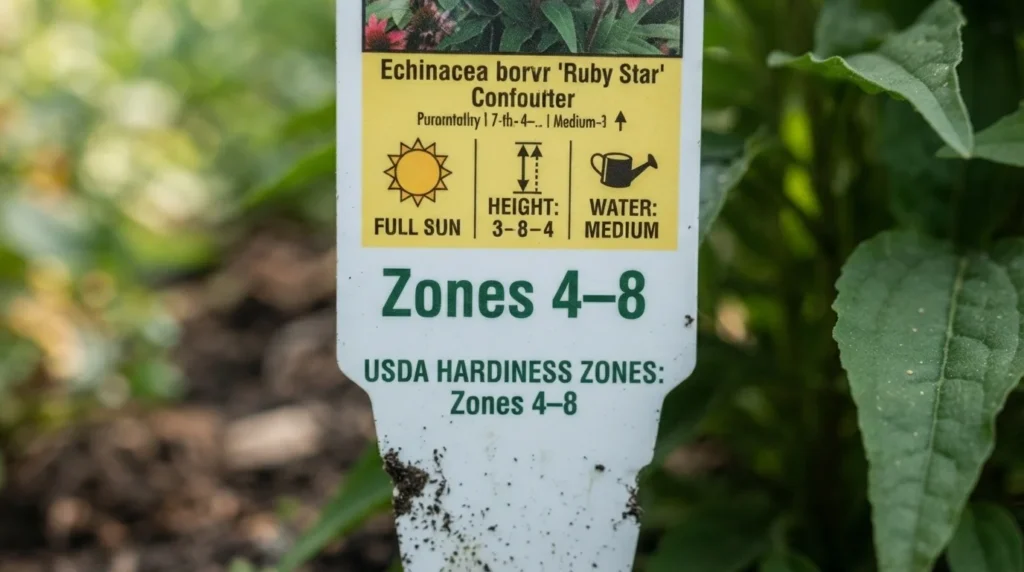
Plant tags usually give a range rather than a single number. Something like “Hardiness zones 4 to 8.” Two numbers, two different meanings.
- The lower number is cold hardiness. It’s the coldest zone where the plant survives winter.
- The upper number is a heat limit. It’s the warmest zone where the plant still performs well.
So a plant rated zones 4 to 8 handles a zone 4 winter, and struggles in zone 9 or 10. It won’t freeze there. It’ll melt.
Common Mistake: Reading only the first number. Advice that says “any plant rated at or below your zone will work” covers the cold half and ignores the warm half entirely. Gardeners in zones 9 and 10 lose plenty of plants this way, and the diagnosis is nearly always heat, not cold.
Some tags only give the cold number. That usually means the plant is widely adaptable, though it’s worth checking a second source if you garden somewhere hot.
Where Your Zone Matters in a Vegetable Garden
You’ll see it argued online that zones don’t matter for vegetable gardeners at all. That goes too far. Zones don’t tell you when to plant, which is true and important, but a vegetable garden holds more than annuals.
Here’s where the number genuinely earns its keep.
Perennial Herbs
The most common place people get caught. Rosemary is hardy to roughly zone 7 or 8 depending on variety. Grow it in zone 6 and it’s an annual, whether or not the tag says perennial.
Same story with bay laurel, lemongrass, and some lavenders. Thyme, sage, oregano, chives, and mint are hardier and come back through most of the country.
I lost two rosemary plants in consecutive winters before I accepted the problem was my zone and not my watering. Now it lives in a pot and comes into the garage in November.
Perennial Vegetables
Asparagus, rhubarb, horseradish, and artichokes all have to survive winter to produce next year. Asparagus takes two or three years before it crops properly, so planting a variety that can’t handle your winter costs you far more than one season.
Rhubarb has the opposite problem. It needs real winter cold to break dormancy, so it struggles in zone 9 and warmer.
Overwintering Crops
Fall-planted garlic sits in the ground through winter. So do overwintered spinach, kale, and some onions. Your zone tells you how much protection they’ll need, and in colder zones whether they need a heavy mulch to make it through at all.
Fruit
Strawberries, raspberries, blueberries, and fruit trees are all long-term plants. Fruit trees add a wrinkle: many need a minimum number of chill hours to set fruit, so warm zones can be as limiting as cold ones.
Whether Something Is an Annual or a Perennial for You
This is the underlying question the zone answers. The same plant can be a perennial in Georgia and an annual in Vermont. Knowing which one applies to you changes what you buy, where you put it, and whether you bother protecting it in October.
Why Your Zone Won’t Tell You When to Plant
Most vegetables are annuals. They germinate, produce, and die inside one season, so winter survival was never part of the plan.
What they care about is the frost-free window. When does frost stop in spring, when does it start again in fall, and how many growing days sit between those two dates.
Two gardens can share a zone and have quite different growing seasons, because the coldest night in January says nothing about how early spring arrives. For planting decisions, use your local frost dates, which we cover in our guide to understanding frost dates, and build your schedule from there with our vegetable planting calendar.
Containers Need a Colder Rating
Zone ratings assume a plant is in the ground. Soil in the ground holds heat and buffers temperature swings. Soil in a pot does neither.
A container sitting above ground is exposed on every side, so its roots experience something much closer to actual air temperature. The practical rule: for anything you plan to overwinter in a pot, choose plants rated about two zones colder than yours.
In zone 7, that means shopping for zone 5 hardiness. It sounds cautious until you lose a potted shrub that would have been fine in the ground three feet away.
Bigger pots buffer better than small ones, and moving containers against a house wall or into an unheated garage buys you real protection. More on pot selection in our notes on choosing pots and potting mix.
What Makes a Plant Hardier or Less Hardy Than Its Rating
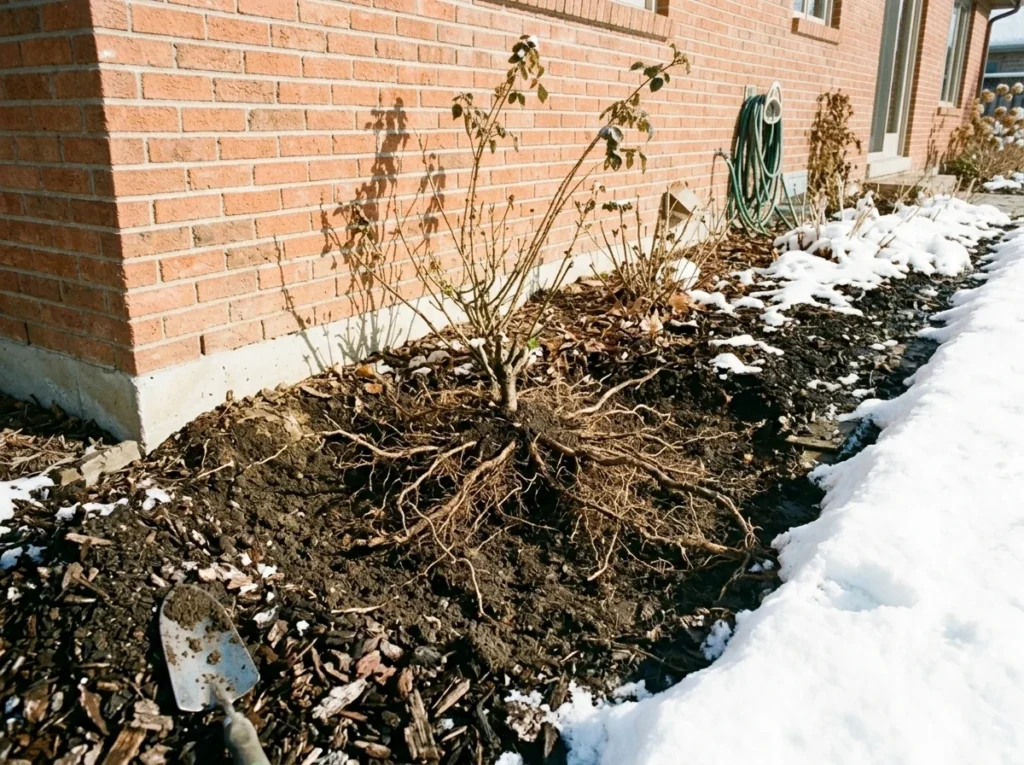
The zone on the tag is a starting point, not a verdict. Several things shift the outcome in your yard.
Drainage. Soil that stays wet through winter makes plants less hardy than their rating suggests. Cold plus soggy roots kills things that cold alone wouldn’t touch. This one surprises people, and it’s the most common reason a correctly-zoned plant fails.
Mulch. A good layer over the root zone insulates soil and can carry a plant through a winter it would otherwise lose. Cheapest hardiness insurance available.
Wind. Exposed sites dry plants out and strip away whatever warmth the ground gives off. A windbreak matters more than most people expect.
Walls and buildings. A south-facing wall radiates stored heat overnight. Plants against one routinely survive winters that kill the same species out in the open.
Snow cover. Consistent snow insulates. A cold winter with deep snow is often gentler on plants than a milder winter with bare ground.
Your Yard Might Not Match the Map
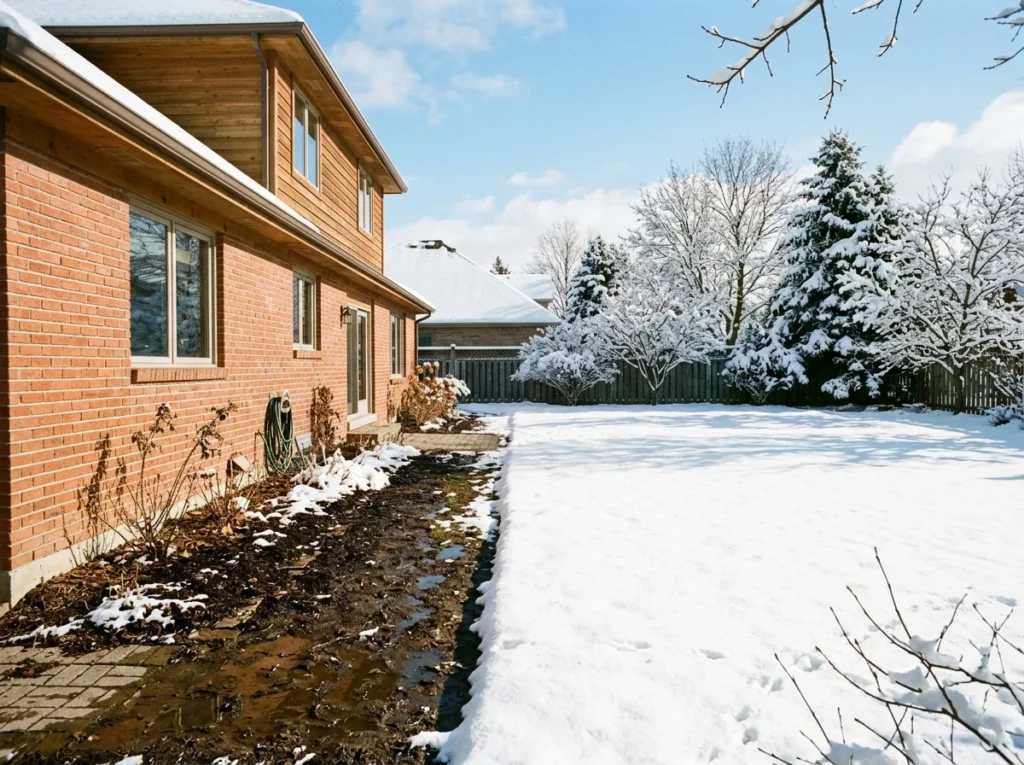
Zone maps are drawn at a scale that can’t see your garden. Small areas that run warmer or cooler than their surroundings are called microclimates, and most are too small to appear on any map.
Cities are the clearest example. Several Chicago zip codes come back as zone 5 in one place and zone 6 in another, because buildings and pavement store heat and lift nighttime temperatures. The same happens near large bodies of water and in valleys where cold air pools.
Your own yard has smaller versions of this. The strip against your south-facing house wall runs warmer than the open lawn. A low corner where cold air settles stays frosty after everywhere else has thawed.
If a plant keeps dying in one spot and thriving twenty feet away, you’ve found a microclimate rather than a gardening failure.
The Map Changed in 2023
The USDA updated the map in November 2023, the first revision since 2012.
Two things changed. The new version draws on 13,412 weather stations, up from 7,983, which improves accuracy in mountains and other places the older map handled poorly. And roughly half the country moved up into a warmer zone.
Worth checking yours if you haven’t since 2023, because plenty of gardeners are still quoting a number from the old map.
That said, it changed less about my gardening than the headlines suggested. Half a zone doesn’t alter when frost arrives, and frost is what actually governs the vegetable garden.
Where the Zone System Falls Short
The framework measures one thing, and researchers have pointed out that this leaves a lot uncovered. A 2024 analysis argued that hardiness zones traditionally focus on surviving winter cold while disregarding other stressors, and proposed criteria across four dimensions instead: heat, cold, dryness, and moisture.
That matches what gardeners notice. Zone 8 in coastal Oregon and zone 8 in central Georgia share a winter low and almost nothing else. One has cool damp summers, the other has months above 90°F with heavy humidity.
The American Horticultural Society publishes a separate heat zone map based on days above 86°F, and some nursery tags now carry a heat zone number alongside the cold one. It’s the natural companion to the USDA map, and it’s still far less widely used.
How to Find Your Zone
Enter your zip code on the official USDA Plant Hardiness Zone Map. It’s free, it’s the current 2023 version, and it gives you the subzone letter as well as the number.
Write it down somewhere you’ll find it again. You’ll want it every time you buy a perennial, and it doesn’t change often.
FAQ
What does it mean if a plant is hardy to zone 5?
It survives winter in zone 5 and in any warmer zone, which means zone 6 and above. If you garden in zone 4 or colder, that plant won’t reliably make it through winter outdoors. The rating refers to cold tolerance only, so it tells you nothing about whether the plant handles your summer heat or your rainfall.
Can I grow a plant that’s rated one zone warmer than mine?
Sometimes, with help. Gardeners do this regularly by planting against a south-facing wall, mulching heavily over the roots, choosing a sheltered spot, or growing in a pot that comes inside for winter. Expect losses in a hard winter, and don’t spend money you’d mind losing. A plant two or more zones outside your range is usually not worth attempting in the ground.
Did my hardiness zone change?
Possibly. The USDA updated the map in November 2023, and about half the country shifted into a warmer zone. If you last checked before then, look it up again. The change reflects both warmer recent temperatures and better data from thousands of additional weather stations, so a shift doesn’t automatically mean your climate transformed.
Do hardiness zones apply to houseplants?
No. Zone ratings describe outdoor winter survival, and indoor temperatures don’t drop anywhere near those numbers. You’ll sometimes see a zone listed on a houseplant tag, which simply indicates where that plant could live outdoors year-round. For indoor growing, light levels and humidity matter far more.
Why does my neighbor grow things I can’t?
Microclimates, usually. A yard with a south-facing brick wall, good drainage, or shelter from wind runs measurably warmer than one that’s open and exposed. Elevation differences of even a few feet matter, since cold air settles in low spots. Watch where snow melts first in your yard, since that’s your warmest ground.
Is my zone the same as my growing season?
No, and this catches a lot of people. Your zone measures winter cold. Your growing season measures the frost-free days between last spring frost and first fall frost. Two places in the same zone can have growing seasons weeks apart, so use frost dates rather than your zone number for any planting decision.
Key Takeaway
Key Takeaway: Your hardiness zone answers one question well: will this plant survive my winter? Use it for perennial herbs, perennial vegetables, fruit, and anything overwintering in the ground. Read both numbers on a plant tag, since the second one is a heat limit. And for deciding when to plant your annual vegetables, ignore the zone entirely and work from your frost dates.
The number is a useful piece of information that has been asked to carry far more weight than it can. Know what it covers, know what it doesn’t, and it stops being confusing.
